
Generation Give
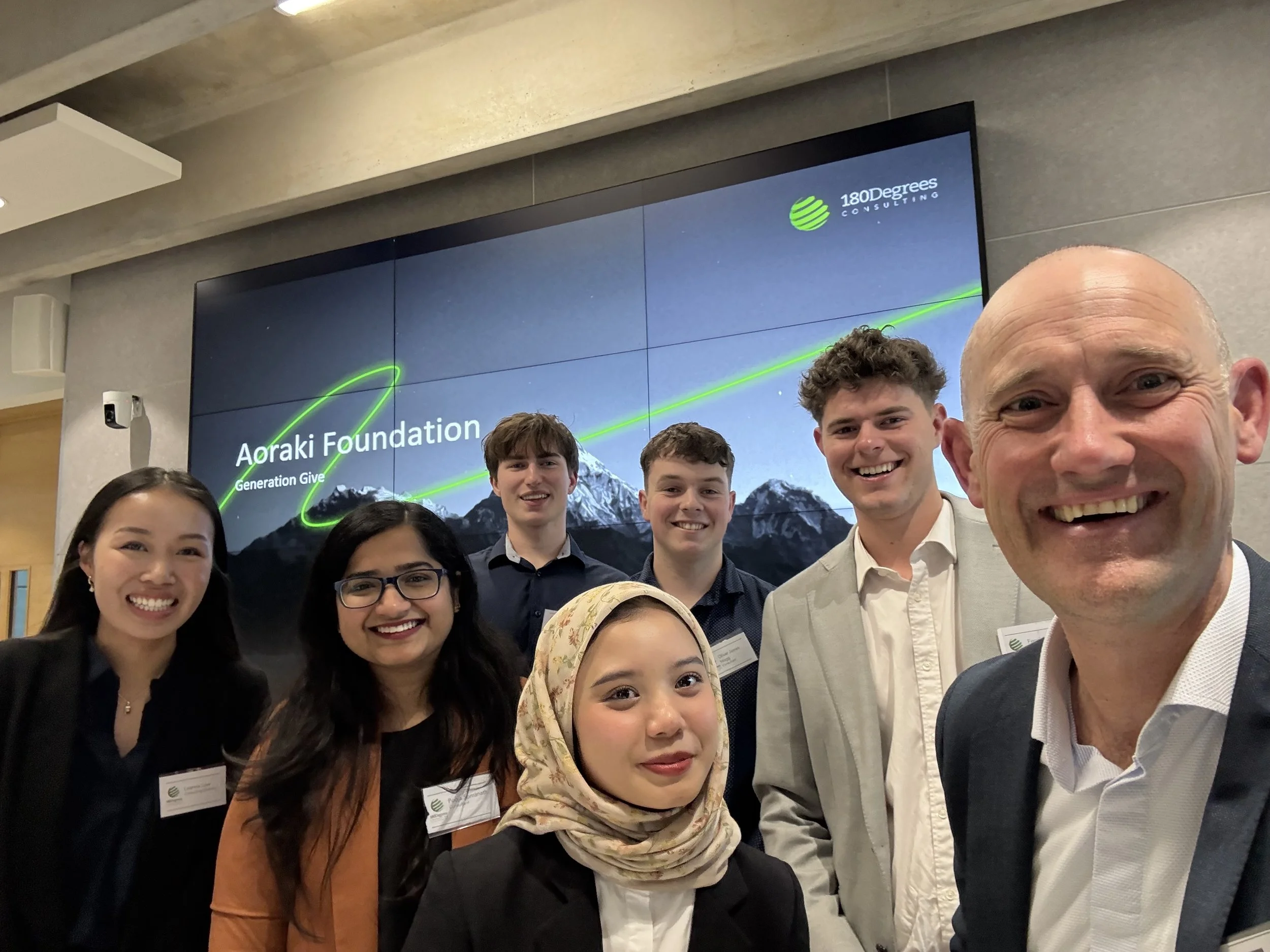
180 Degrees Consultancy team
Front Row L to R – Leanna Low, Pooja Nair, Umairrah Zaifuddin, Richard Spackman (Aoraki Foundation)
Back Row L to R - Ryan Whittaker, Oliver Hogg, and Fergus Smith
Sometimes the best ideas do not begin with a strategy session or a carefully crafted plan. Sometimes they begin with a simple, unexpected email.
That was the case for the Aoraki Foundation’s Generation Give programme. Out of the blue, former Timaru Girls’ High School student Leanna Low got in touch while studying at the University of Canterbury. She offered support through UC’s student-led consultancy group, 180 Degrees Consulting, suggesting a team could help tackle a challenge we were facing.
At the time, there were plenty of possibilities, from growing donations to increasing social media engagement. But one idea sitting quietly in the background stood out: Generation Give.
Community Foundations across Aotearoa, including Christchurch and Queenstown, have run programmes under the same name. These are typically structured like the Young Enterprise Scheme but focused on the not-for-profit sector, with students working in teams to design and deliver fundraising campaigns for charities.
These programmes were built on the belief that volunteering and service was waning with younger generations and that a structured education course could motivate students into action. While they have delivered good outcomes, it raised an important question for us. Had anyone actually asked young people if this was what motivated them?
Working alongside the 180 Degrees Consulting team throughout 2025 began to challenge that thinking. Led by Leanna and made up of five second and third year students, the team explored how Generation Give could be reimagined. Through their research and conversations with young people, a different picture started to emerge. Generosity and service was not declining, it was changing.
The defining moment came at the final 180 Degrees presentation evening. Sitting in that room, listening to students present their work, it became clear that something much bigger was going on. Their ideas, energy, and sense of purpose told a very different story about this generation.
That was the light bulb moment.
Young people were not waiting to be inspired to give. They were already doing it. They were supporting causes they cared about, responding to issues in their communities, and finding ways to contribute that were flexible and closely tied to their values.
Generation Give did not need to be about creating generosity. It needed to be about recognising it.
The 180 Degrees team reflected this shift in their recommendations. Instead of a heavily structured programme, they proposed something more flexible and student-led. Young people could choose how they give, through volunteering, fundraising, or acts of service that matter to them. The Foundation could then support them with connections, advice, and promotion. They also suggested ideas like student leadership, recognition for involvement, and a sense of friendly competition between schools.
The biggest shift, however, was in how we saw our role.
We came to understand that Aoraki Foundation is not here to inspire generosity in young people because it is already there. Our role is to amplify it. That means sharing stories, creating connections, and helping our community see what rangatahi across South Canterbury are already doing.
This was reinforced in February when we began working with Roncalli College to pilot the programme. Meeting the Year 13 Service Leaders, Alex Thian, Arianna Labuschagne, Ben Sanders, and Madeline Jones, alongside Sally Betts, brought everything to life. Their enthusiasm and commitment confirmed what we had already begun to understand. The spirit of service is alive and well.
Roncalli was a natural place to start. The school already has a strong culture of service, with initiatives ranging from chemo care bags for patients at Timaru Hospital to the Fishes and Loaves community meal and regular support for younger students. These are not big, one-off gestures. They are consistent and thoughtful acts of generosity that make a real difference.
Generation Give is not about launching something new. It is about recognising what already exists and making sure our community sees it.
It is about changing the narrative and celebrating a generation that is already giving, already leading, and already making a difference.